Bougainvillea

Original price was: ₨ 17,000.Current price is: ₨ 14,500.

Botanical Description: Bougainvillea Topiary
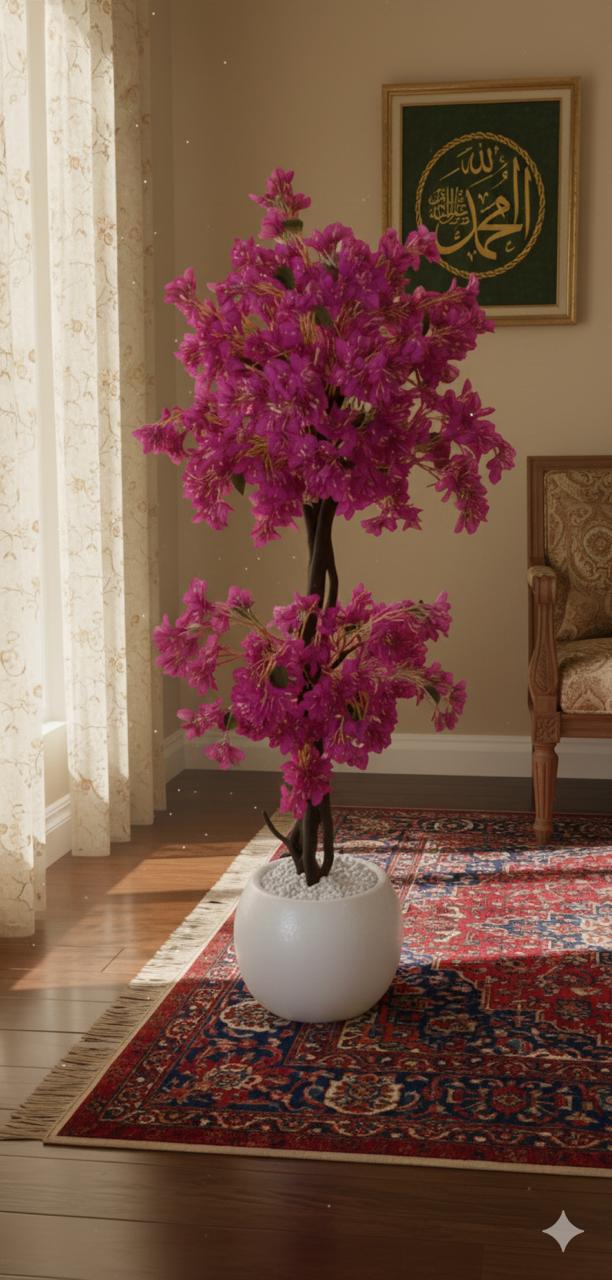
The plant shown in your image is a Bougainvillea (specifically a Bougainvillea spectabilis or Glabra), which has been professionally trained into a Double-Ball Topiary (also known as a two-tier standard).
1. Morphological Characteristics
The “Flowers” (Bracts): The most distinctive feature is the mass of vibrant magenta-pink clusters. In botanical terms, these are not actually flowers but “bracts”—modified leaves that have a thin, papery texture. This is why the plant is commonly nicknamed the “Paper Flower.” * True Flowers: If you look closely at a real Bougainvillea, you will find tiny, creamy-white tubular flowers tucked inside the center of the colorful bracts.
The Trunk: The plant features a woody, central stem. In this topiary style, several stems are often braided or twisted together to create a sturdy “trunk” that supports the weight of the foliage above.
Foliage: Underneath the bright pink canopy are small, ovate (heart-shaped) green leaves. The contrast between the deep green leaves and the neon-pink bracts is what makes this plant a favorite for interior and exterior decor.
2. Growth & Origin
Scientific Name: Bougainvillea (Family: Nyctaginaceae).
Native Habitat: It is a tropical woody vine native to South America (specifically Brazil, Peru, and Argentina). It thrives in hot, dry climates and is incredibly drought-tolerant.
Adaptability: While naturally a sprawling, thorny climber that can reach up to 30 feet, it is highly versatile. It can be pruned into hedges, groundcovers, or formal trees (topiaries) as seen in your photo.
3. Horticultural Requirements (Care)
If you are planning to keep a real plant of this type, keep these “Long-Term Care” tips in mind:
Light Exposure: This is a high-light plant. To maintain that intense pink color, it requires at least 6 to 8 hours of direct sunlight daily. Indoors, it must be placed near a south-facing window.
Watering Logic: It follows a “soak and dry” rule. You should water it thoroughly and then wait until the top inch of soil is completely dry before watering again. Over-watering will cause the bracts to fall off.
Pruning: To keep the “ball” shape neat, the plant needs regular trimming. It blooms on “new wood,” so pruning actually encourages more color to grow.
Soil: It prefers well-draining, slightly acidic soil. It does not like “wet feet” (roots sitting in water).

Categories , Tag
Share it :

Description

Vibrant Color: The most striking feature is the intense magenta or fuchsia pink color. Interestingly, these colorful parts are not the actual petals but are specialized leaves called bracts. The true flowers are the tiny white/yellowish tubes found in the center of these bracts.
Structure: This specific plant has been trained into a topiary shape. It features a braided or twisted woody trunk that clears the bottom section, leading to two distinct, rounded clusters of dense foliage and blooms.
Foliage: Underneath the bright pink bracts are small, heart-shaped green leaves that provide a lush backdrop to the color.
2. Botanical Profile
Scientific Name: Bougainvillea spectabilis or Bougainvillea glabra.
Origin: It is a tropical woody vine native to South America (Brazil, Peru, and Argentina) but is now extremely popular in South Asia, the Middle East, and Mediterranean regions.
Growth Habit: Naturally, it is a thorny, climbing vine that can grow quite large. However, as seen in the photo, it can be pruned and “bonsai-ed” into various shapes.
3. Care and Maintenance
If you were to keep a real plant like this, it would require specific care:
Sunlight: This is a sun-loving plant. It needs at least 6 hours of direct sunlight daily to produce those bright colors. Indoors, it must be placed right next to a very sunny window.
Watering: It prefers “deep but infrequent” watering. It likes its soil to dry out almost completely between waterings. Overwatering can lead to root rot or cause the leaves to fall off.
Pruning: To maintain the neat, round “ball” shapes seen in the image, regular trimming is necessary. Without pruning, it will quickly send out long, thorny shoots.
4. Role in Interior Decor
In the context of the room in the photo (with the ornate rug and traditional furniture), the Bougainvillea adds a pop of organic color. Its height helps draw the eye upward, making the room feel more spacious and lively. While usually an outdoor plant, high-quality “artificial” versions or very well-maintained real ones are often used in luxury interior design to create a Mediterranean or tropical vibe.

Reviews

There are no reviews yet.

Be the first to review “Bougainvillea”

Your email address will not be published. Required fields are marked *

Shopping cart0
There are no products in the cart!
Continue shopping
0